.png?width=2004&height=239&name=FlipSled%20Logo%20HRZ%20WHITE%20(1).png "FlipSled - Athletic Power Development")

Explosive speed wins the first step, the first five yards, and the first decision. That matters in field sports, whether it’s football, soccer, lacrosse, or something else. The best part is you don’t need complex programming to increase your speed; you just need the right intent, the right drill, and repeatable standards.
In this article, we’ll go over some proven drills for field sports that will help you and your team boost explosive speed. You’ll build acceleration, re-acceleration, and controlled deceleration to move fast and stay in position.
Coach Speed Like a Skill, Not A Test
Speed training fails when it turns into random “conditioning” with no target. Treat speed like a skill, and you’ll see faster improvements, cleaner mechanics, and better transfer to the field. You don’t need to talk like a biomechanics lab to do that, either.
Start by defining what you’re training on that day. Acceleration means projecting forward and building speed quickly. Top speed means stiffness and rhythm. Change of direction means braking, reloading, and leaving on an angle without wasting steps.
The Simple Rules That Make These Drills Work
You get more speed when the effort stays high, and the quality stays clean. That means you keep reps short enough to stay explosive and you rest long enough to repeat that same output. You also stop a drill when form falls apart, because fatigue reps teach slow patterns. Below are some proven drills for field sports to help athletes boost their explosive speed.
Drill 1: Heavy Sled March to Sprint
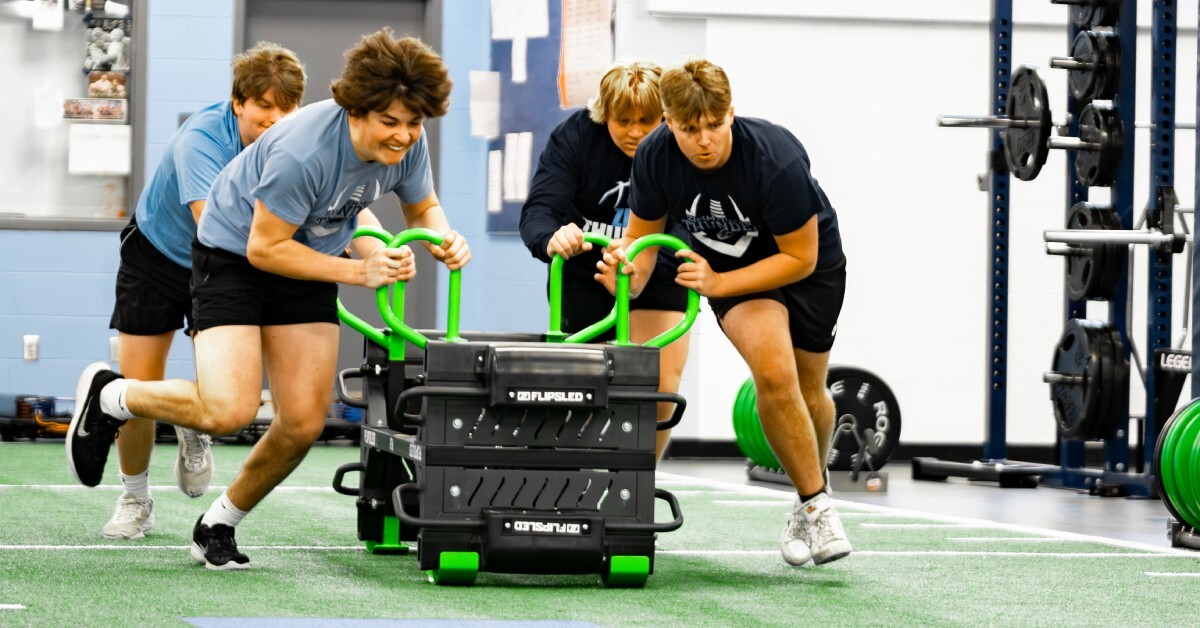
This drill teaches athletes to push the ground back and project forward, then immediately express that pattern at speed. Set a heavy sled so the athlete can move it with effort, but still keeps their posture tall through the torso. If the athlete folds at the waist or starts choppy, lighten the load.
Have the athlete march the sled for a short distance with powerful, deliberate steps. Then unhook or step off the resistance and sprint the same line for a short burst. Coach “drive back,” “hips through,” and “step down under you,” and you’ll usually see a cleaner first three steps right away.
Drill 2: Resisted Acceleration Sprints
Resisted sprints stay simple and brutally effective. They teach athletes to push, not reach, and they give you an easy way to progress intensity across a season. Use functional training equipment like a sled, belt, or harness setup that lets the athlete lean slightly and keep the torso strong.
Keep the sprint distance short so every step is aggressive. The goal is not to grind, the goal is to accelerate. When the athlete starts popping straight up too early or overstriding, reduce load and win back crisp steps.
Drill 3: Sled Push Starts for First-Step Pop
Sled pushes build the exact quality many field and tactical athletes lack: producing force quickly from a dead stop. That shows up in a pass rusher’s first step, a midfielder’s burst to a loose ball, and a firefighter’s drive up a stairwell. You can coach it with one phrase: “Win the first two steps.”
Set the hands on the sled, lock the ribcage down, and cue a violent push through the floor. Keep it short and snappy so it doesn’t turn into a slow conditioning push. If you have a FlipSled, this is a natural fit because you can push, drag, and move straight into the next drill with the same tool.
Drill 4: Lateral Drag to Re-Accelerate
Most speed plays are not straight-line. Athletes shuffle, reposition, and then explode again. A lateral drag teaches that exact re-acceleration pattern while keeping hips loaded and feet under control.
Attach the sled so it pulls from the waist or hands. The athlete drags laterally with quick, powerful steps, then on your call, turns and accelerates forward for a short sprint. Coach “stay low,” “hips loaded,” and “snap to go,” and you’ll train change of direction without endless cone chatter.
Drill 5: Decel Drop To Stick
If athletes can’t brake, they can’t cut fast. They either take extra steps to slow down or they crash into positions they can’t own. Tactical athletes see the same issue when they try to stop and stabilize with gear, tools, or a partner in play.
Use a short sprint into a hard deceleration. Cue the athlete to drop the hips, keep the chest proud, and “stick” the position for a brief pause before walking back. Keep the distance short and the standards strict, because sloppy decels teach risky mechanics and waste practice time.
Drill 6: Curve Sprints for Real-World Angles
Field sport speed rarely happens on a straight rail. Athletes run arcs, bend around defenders, and accelerate on angles. Curve sprints train that skill while keeping the drill simple enough for any coach to run.
Set a gentle arc and cue “lean with the whole body, not just the shoulders.” The athlete should feel like they’re pushing the ground away while staying tall through the torso. If they twist or cross over wildly, slow it down, clean it up, then build speed again.
Drill 7: Contrast Pushes for Instant Speed Transfer
Contrast work gives athletes an immediate “go faster” sensation without complex theory. You hit a short resisted effort, then you sprint free. This can sharpen intent in-season when you want speed without a ton of volume.
A practical option is a short sled push, then a short sprint after a brief reset. Keep the push crisp, not long. When it turns into a grind, you lose the point, and you pile up fatigue.
.jpg?width=1200&height=628&name=gH73o7spPZ6ekLJRYw14UanriBPhyu0B1773782221%20(1).jpg)
How To Program These Drills Without Overthinking It
Pick one main theme per day, then build around it. If you choose acceleration, use one resistance drill and one free sprint drill, then finish with a small dose of decel or lateral work. If you choose a change of direction drill, start with decel mechanics, then add a drag-to-go or angle sprint.
For tactical emphasis, keep the same skeleton but add context. You can run the same acceleration work, then finish with controlled starts from different positions like prone, half-kneel, or a staggered stance. You keep the speed intent intact, but you make it feel like the job.
Common Mistakes That Slow Athletes Down
If you place speed at the end of a brutal conditioning block, you’re training tired mechanics. Put speed early, protect quality, and you’ll see cleaner movement with less chaos.
Another mistake is turning every drill into a competition for distance. Speed comes from violent intent and clean positions, not from grinding longer. When the reps get longer, the output drops, and athletes start surviving instead of sprinting.
Bring Speed Training Back To Simple
Explosive speed doesn’t come from magic drills. It comes from a few proven patterns done with intent, coached with clear standards, and repeated week after week. When you use functional training equipment to guide posture and effort, you make speed training easier to teach and harder to mess up. If you want a simple way to run pushes, drags, and foundational power work in one spot, explore how the FlipSled fits into your speed sessions and your tactical prep.
.jpg)
How To Improve Football Athletes’ Change-of-Direction Speed
12 Ways To Develop Speed and Power in Linemen
.png?width=200&height=24&name=FlipSled%20Logo%20HRZ%20WHITE%20(1).png)