.png?width=2004&height=239&name=FlipSled%20Logo%20HRZ%20WHITE%20(1).png "FlipSled - Athletic Power Development")

Football comes down to force. Linemen drive defenders off the ball, running backs accelerate through contact, linebackers close space, and defensive players fight to control leverage. Strength matters in each of those situations, but strength alone does not explain why one athlete can move an opponent while another stops at contact.
Physics helps explain what happens. Concepts such as force, acceleration, friction, momentum, and leverage shape nearly every explosive movement on the football field. Below, we’ll look closer at the physics behind sled training for football players and how coaches can put it to use for their team.
How Physics and Football Come Together
Every football movement requires an athlete to apply force against something. During a sprint, the athlete pushes against the ground. During contact, the athlete applies force into an opponent while maintaining balance and body position. During resisted training, the athlete must produce enough horizontal force to overcome resistance and continue moving.
That makes sled work useful beyond simply making a workout harder. Coaches can manipulate resistance, distance, direction, and movement speed to change the physical demand of a drill. Understanding the underlying physics helps coaches choose resistance that matches what they want athletes to develop.
Force Creates Movement
Newton's second law states that force relates to mass and acceleration. In practical football terms, an athlete must produce enough force to accelerate his own body, move external resistance, or displace another player.
A football training sled adds external resistance that athletes must overcome through forceful contact with the ground. As resistance increases, athletes must push harder through each step to keep the sled moving. That makes the exercise particularly relevant for developing the ability to apply force horizontally, which is critical in football movements.
Ground Reaction Force Drives the Athlete Forward
When an athlete pushes backward and downward into the ground, the ground produces an equal and opposite reaction. That reaction force helps propel the athlete forward.
Sled drills can encourage athletes to produce deliberate, forceful steps while maintaining forward intent. Coaches can use this environment to reinforce aggressive leg drive without adding complex technical cues. The athlete receives immediate feedback because poor force application makes the sled slow down or stop.
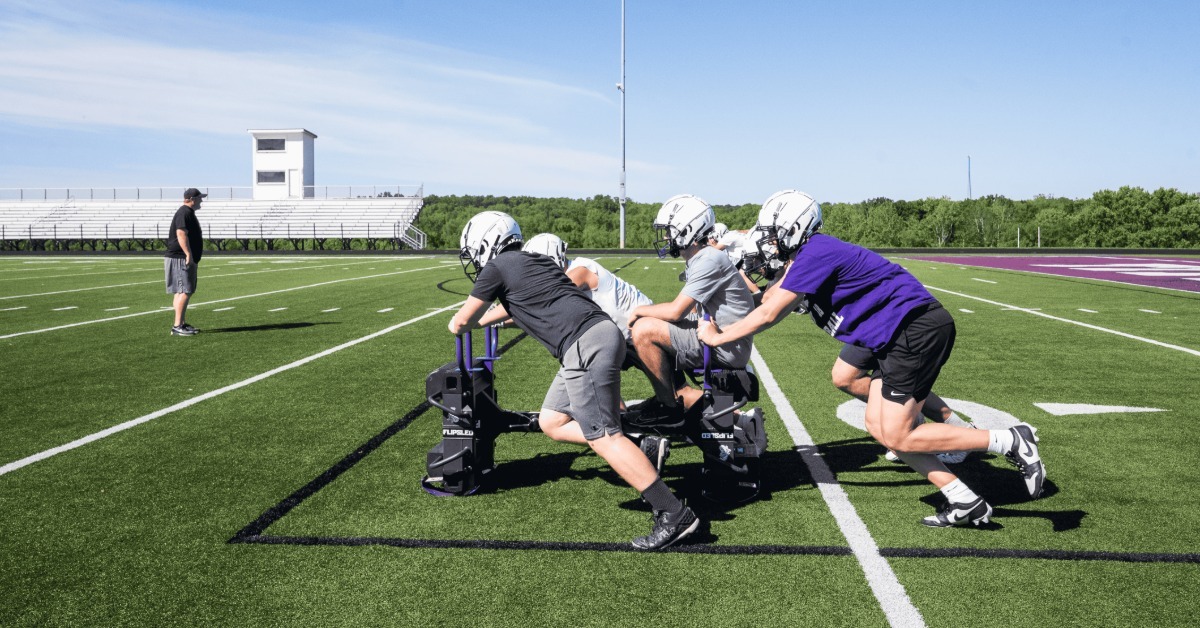
Friction Determines How Much Resistance Athletes Face
A sled does not create resistance through weight alone. Friction between the sled and the training surface also affects how difficult the movement becomes. The same sled can feel very different on turf, grass, concrete, or another surface because each creates a different amount of friction.
This matters when coaches plan workloads. Adding weight increases resistance, but surface conditions also influence the force athletes must produce. Coaches should pay attention to both factors rather than assuming the same load creates the same training stimulus everywhere.
More Resistance Does Not Always Mean Better Training
Heavy resistance can develop force production, but excessive resistance can change how an athlete moves. If an athlete can barely move the sled, the drill becomes a different physical task than a fast, aggressive push.
Coaches should match resistance to the intended adaptation. Heavier loads can emphasize force, while lighter resistance can allow greater movement speed. The right choice depends on whether the session emphasizes acceleration, strength, conditioning, or power.
Momentum Explains Why Finishing Matters
Momentum depends on mass and velocity. In football, athletes who generate speed and maintain force through contact create a much different collision than athletes who slow down before contact.
Sled training can reinforce the habit of continuing to apply force through the entire movement. Instead of producing one strong step and relaxing, athletes must maintain pressure to keep the implement moving. That demand can help coaches teach athletes to accelerate through resistance rather than merely reaching it.
Repeated Force Builds Football-Specific Work Capacity
Football rarely asks players to produce force once and stop. Sled work allows coaches to train repeated force production in a controlled setting. By adjusting distance, resistance, and rest, coaches can create drills that challenge athletes to maintain quality force across several efforts while preserving simple movement patterns.
Leverage Changes Force Application
Force becomes more useful when athletes apply it from strong positions. Body angle, center of mass, foot placement, and posture influence how effectively an athlete transfers force into the ground or an external object.
An athlete who loses posture or allows the feet to get too far ahead of the body may struggle to direct force efficiently. Sled work gives coaches a visible way to reinforce strong positions because inefficient mechanics make resistance harder to move.
Horizontal Force Has Clear Value for Football
Many weight room exercises emphasize vertical force production. Those exercises remain valuable, but football also demands substantial horizontal force. Players accelerate forward, drive opponents backward, redirect bodies, and fight against resistance in multiple directions.
Pushes, drags, pulls, and similar movements expose athletes to horizontal resistance. That gives coaches another way to develop force qualities alongside traditional strength training rather than trying to replace it.
Why Variable Sled Movements Matter
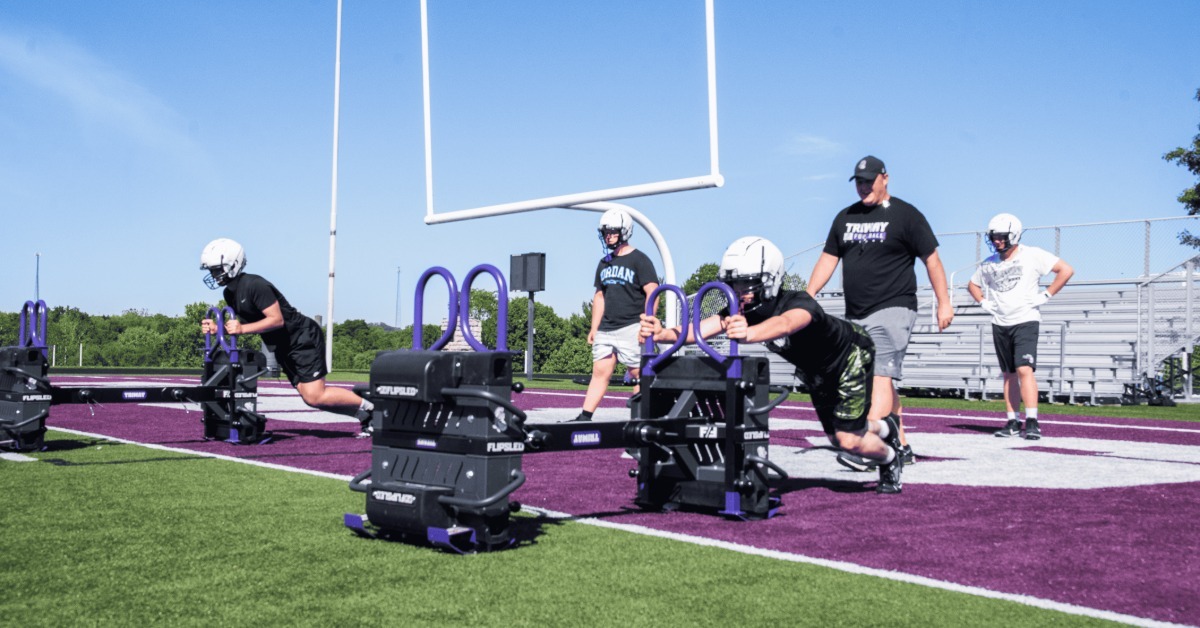
Football athletes do not perform every action from the same body position. They push, pull, rotate, accelerate, brace, and finish from changing angles. A versatile sled allows coaches to train several of those force applications while keeping the equipment and setup simple.
The FlipSled expands that concept by allowing athletes to push, pull, drag, carry, and flip within the same training system. Those movement options can help coaches train explosive power and functional strength while changing the direction and type of resistance athletes must manage.
Flipping Changes the Physics
Flipping an implement introduces a different challenge from pushing or dragging it. The athlete must create enough force and torque to rotate the object while controlling body position through the movement. That combination requires athletes to coordinate the legs, hips, trunk, and upper body.
How Coaches Can Apply These Principles
Now that you understand the physics behind sled training, how can you put it into practice for your football players? The practical takeaway is simple: resistance changes how athletes must produce and direct force.
Coaches can adjust load when they want more force, reduce resistance when they want greater speed, change movement direction to alter force demands, and vary distance to control work capacity. Watching movement quality matters as much as counting plates because athletes should still demonstrate strong posture, aggressive intent, and consistent force application.
Sled Training Should Complement the Rest of the Program
Sled work works best as one part of a complete strength and performance program. Traditional lifting develops foundational strength, sprinting develops high-speed movement, jumping builds explosive qualities, and sport practice develops football-specific execution.
Resisted sled work can connect several of those qualities. It gives athletes a straightforward environment for producing force against external resistance while moving through space, making it a useful bridge between weight room strength and athletic movement.
Turn Physics into Better Football Training
Football coaches do not need advanced equations to benefit from the physics behind sled training. Force, friction, acceleration, momentum, and leverage simply explain why resisted movement can place useful demands on football players.
FlipSled gives programs a simple way to put those concepts into practice through pushes, pulls, and flips. If you want to add versatile resisted training to your football strength program, explore FlipSled and see how one piece of equipment can help athletes develop explosive, functional power.
.jpg)
The Science of Horizontal Force Production in Football
.png)
10 Tips for Building Explosive Power for Football Success
.png?width=200&height=24&name=FlipSled%20Logo%20HRZ%20WHITE%20(1).png)