.png?width=2004&height=239&name=FlipSled%20Logo%20HRZ%20WHITE%20(1).png "FlipSled - Athletic Power Development")

Every coach knows the player who looks like a star Monday through Thursday, then disappears under the lights. Coaches also know the opposite type: the athlete who struggles in practice, misses details, and still flashes when the game turns chaotic.
Practice performance can reveal a lot, but it does not tell the whole story. Below, we’ll break down why some athletes are better in practice than others, and how to help them perform when it matters most.
Some Athletes Shine When the Picture Stays Clean
Practice gives athletes structure. Coaches set the drill, define the rep, control the pace, and explain the correction. That helps detail-driven players move fast because they know exactly what comes next.
These athletes may process coaching quickly, line up correctly, and repeat the same movement with strong consistency. They look sharp because the environment rewards attention, rhythm, and discipline.
Practice Performance Starts With Confidence
Confidence changes the way an athlete moves. A confident player gets into position faster, attacks the rep harder, and responds to coaching without freezing. That player does not waste energy wondering what might go wrong.
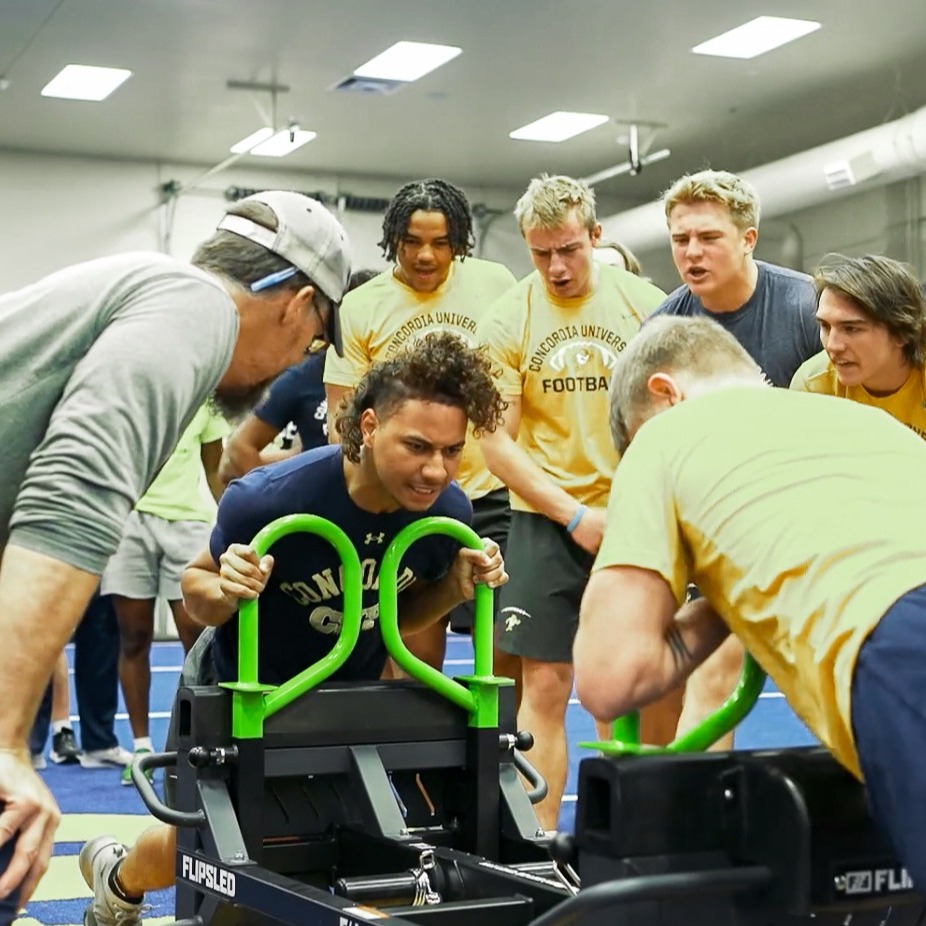
Coaches can build that confidence through simple, repeatable work. When athletes use football sleds, resisted movement can help them feel force production, body position, and finish in a direct way. The rep becomes clear, physical, and easy to coach.
Clear Reps Reduce Hesitation
Hesitation kills practice speed. When athletes think too much before contact, they lose leverage, power, and timing. They may know the assignment, but their body does not trust the movement yet.
Clear reps help remove that pause. When a coach sets up a drill with one main focus, the athlete can attack instead of overthinking. Simple coaching points create faster learning than long speeches between reps.
Repetition Builds Trust
Players gain trust by stacking successful reps. They need to feel their stance, first step, pad level, hips, hands, and finish connect under pressure. Once they feel it enough times, they stop hoping the rep works and start expecting it.
That trust matters. Athletes who believe in their training carry more speed into each rep. They also handle correction better because they see feedback as part of the process, not as proof that they failed.
Some Athletes Need a More Physical Learning Style
Not every athlete learns best through verbal instruction. Some players need to feel the movement before they understand it. They may struggle when a coach explains leverage, hip drive, or finish, but they improve when the drill makes those demands obvious.
Football rewards athletes who can turn instruction into action. Coaches can speed up that transfer by using equipment, resistance, and body-position drills that make the lesson physical.
The Body Learns Through Pressure
Pressure shows athletes the truth. A player can look great in a stance drill, then fold when resistance arrives. That does not mean the athlete lacks talent. It means they don’t know how to hold the position and create force through contact.
Good practice design adds pressure in the right amount. Too little pressure makes the rep fake. Too much pressure creates sloppy movement. The right amount teaches the athlete how to stay powerful while the rep fights back.
Coaches Should Coach the Main Thing
One reason why some athletes are better in practice than others is that they receive too much information, and a simple way to help them is to keep things simple.
Pick the main thing. Coach it hard, repeat it, and move forward when the athlete shows progress. Players improve faster when they know what matters most on that specific rep.
Practice Stars Understand the Standard
Some athletes perform better in practice because they understand the standard. They know how the coach wants to start the drill, how fast the group should move, and what a finished rep looks like. They do not wait for constant reminders.
That awareness creates an edge. A player who understands the standard saves mental energy for effort and execution. A player who feels unsure burns energy just trying to keep up.
Make the Standard Visible
Coaches can help more athletes by making the standard visible. Demonstrate the rep, show the finish, explain what counts as a win, and then repeat the same language every time the drill returns.
Players need consistency. If the standard changes every day, athletes spend practice chasing moving instructions.
Praise What You Want Repeated
Athletes repeat what coaches recognize. If a coach only corrects mistakes, players may become cautious. If a coach praises strain, finish, speed, and body position, athletes learn what deserves attention.
Praise does not need to be soft. Being explicit in what you want teaches more than a generic compliment because it connects the behavior to the standard.
Some Players Struggle Because Practice Feels Too Safe
Practice can become too controlled. Lines move neatly, reps start on command, and defenders act within the drill’s limits. That structure helps teaching, but it can hide whether athletes can adjust when the rep gets messy.
Game situations demand reaction. Players must recover from bad angles, awkward contact, late movement, and noise. Athletes who only shine in clean drills may struggle when the picture changes.
Add Chaos Without Losing Control
Coaches do not need to turn practice into a scramble. They can add small doses of chaos while keeping the drill safe and purposeful. A change in cadence, angle, finish point, or partner can make athletes react instead of memorize.
This approach helps practice transfer. Players still work within a clear structure, but they must solve a problem during the rep.
Let Players Compete
Competition reveals focus. When athletes compete, they show how well they can execute under pressure. Coaches can see who keeps technique, who panics, who strains, and who rises when the rep matters.
Short competitive segments can bring energy to practice without wasting time. The coach sets the rules, defines the win, and keeps the tempo high.
Helping Practice Players Become Game Players
A practice player becomes a game player when training transfers. That requires more than clean reps. It requires confidence, contact, decision-making, and the ability to create force when the picture changes.
Coaches can build that bridge by progressing drills. Start with teaching, add resistance, increase speed, create competition, and finish with game-like reactions.
Build From Simple to Violent
Football rewards controlled violence. Athletes need simple teaching first, but they cannot stay in low-intensity work forever. At some point, the rep must demand power, strain, and finish.
The best practice plans build that progression on purpose. Teach the position, load the movement, raise the tempo, and require a finish. That path helps athletes bring practice skill into live football.
Better Practice Starts With Better Transfer
Some athletes practice better because they trust the environment, understand the standard, and respond quickly to coaching. Others need clearer reps, more physical feedback, and a better bridge between drills and game demands.
Coaches can help by simplifying the message, adding purposeful resistance, rewarding the right behaviors, and building from clean technique to competitive strain. If your program wants a simple, powerful way to train ground-up force, physical finish, and full-body football movement, explore FlipSled and see how it can fit into your team’s training plan.
Team FlipSled Competition
Creating Faster, More Explosive Football Practices: A Guide
.png?width=200&height=24&name=FlipSled%20Logo%20HRZ%20WHITE%20(1).png)