.png?width=2004&height=239&name=FlipSled%20Logo%20HRZ%20WHITE%20(1).png "FlipSled - Athletic Power Development")

Barbell strength matters in football. Squats, cleans, presses, and pulls build size, strength, and confidence in the weight room. But football does not happen on a platform, and players do not win blocks by moving weight in a straight line under perfect conditions.
Football power starts where the cleats meet the turf. Every block, strike, sprint, cut, and finish begins with force driven into the ground. When coaches train athletes to use the ground better, they build power that carries into the chaos of Friday night. Below, we’ll break down the key reasons why football power starts at the ground, not the barbell.
Why Ground-Based Power Matters in Football
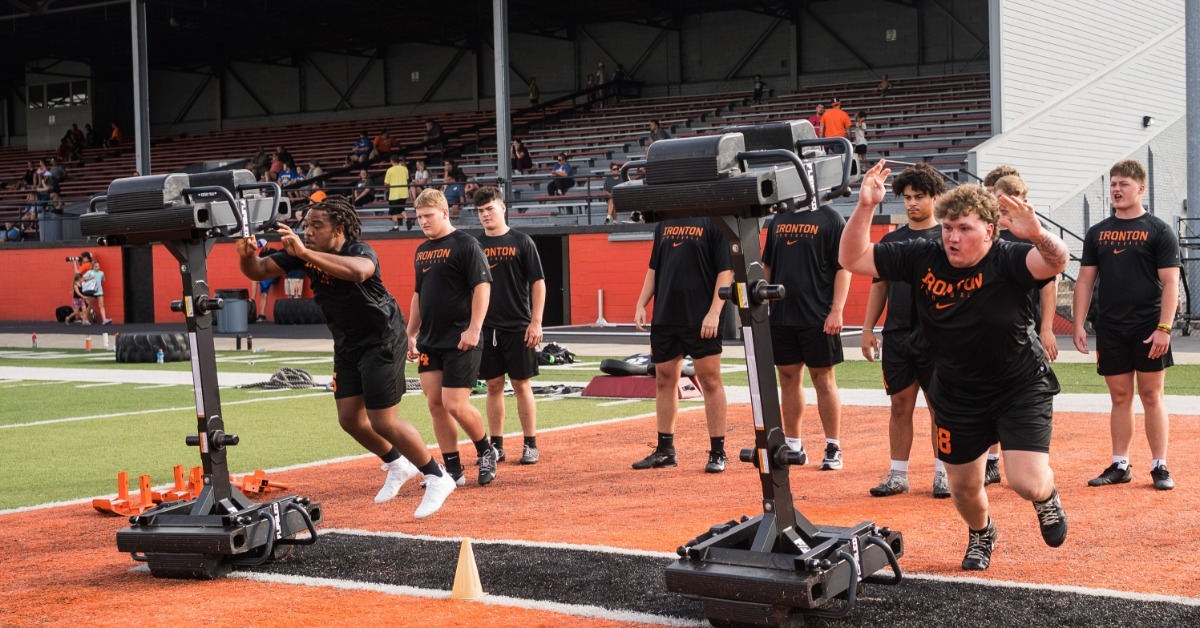
A football sled gives athletes a direct way to feel how force moves from the ground, through the body, and into contact. Instead of only lifting a load upward, players must push, drive, brace, and finish through resistance with their feet under them.
That matters because football rewards applied power. A strong player still needs body control, leverage, hip drive, and intent. The barbell can build the engine, but ground-based training teaches athletes how to put that engine into the field.
1. Football Starts With the Feet
Every powerful football movement starts with foot pressure. A lineman cannot drive a defender, a linebacker cannot fill a gap, and a running back cannot burst through contact without force into the ground.
The feet set the rest of the body up to win. When an athlete learns to grip the turf, push through the ground, and connect through each step, strength becomes usable. That is where weight room numbers start turning into field power.
2. Leg Drive Moves Opponents
A heavy squat can build strong legs, but football asks players to use those legs while moving another person. That requires continuous leg drive, not just one clean rep from a fixed position.
Ground-based resistance teaches athletes to keep pushing after first contact. Players learn to stay active with their feet, keep their hips involved, and drive through the finish. That kind of work fits the reality of line play, where the rep does not end at contact.
3. Hip Power Creates Explosion
Another reason that football power starts at the ground and not the barbell is hip explosion and extension. The hips connect lower-body force to upper-body contact, and they help athletes accelerate, strike, flip, run, and change direction.
Barbell lifts can train hip extension, but football demands hip extension under pressure. When athletes push, drag, flip, or drive a sled, they feel how the hips help them create forward force. That connection builds a more complete kind of football power.
4. Leverage Beats Weight Room Strength Alone
The strongest player on the roster does not always win the block. Football punishes poor leverage, high pads, loose posture, and bad body position. Strength only matters when the athlete can apply it from a winning angle.
Ground-based work teaches players to stay low, keep their balance, and apply force forward. They learn that power does not come from standing tall and muscling through the rep. It comes from bending, bracing, and driving from the ground up.
5. Contact Requires Full-Body Coordination
Football contact does not isolate one muscle group. The legs, hips, core, back, chest, shoulders, arms, and hands all need to work together in a violent, controlled sequence.
That is why field-based resistance has so much value. Athletes must coordinate their whole body while moving against a load. The rep teaches them to connect their base, hips, trunk, and finish instead of relying on one strong piece of the chain.
6. Acceleration Depends on Horizontal Force
Speed in football starts with projection. An athlete must push backward and down into the ground to move forward with force. That first step can decide the play before the opponent can recover in time.
Barbell training builds strength, but acceleration needs horizontal force. Sled pushes and drives teach athletes to attack the ground at an angle that matches football movement. Players feel the difference between just being strong and covering ground with power.
7. Balance Keeps Power Under Control
Power without balance leaks all over the field. A player who overextends, rises too fast, or loses foot pressure cannot keep force moving where it needs to go.
Ground-based training challenges athletes to organize their body and leverage while working hard. They must control their feet, brace their trunk, and keep their body in position through the entire rep. That creates a stronger, more stable athlete who can handle contact without falling apart.
8. Finishing Power Wins Late in the Rep
Many players can create a strong first pop. Fewer players can stay attached, keep driving, and finish with the same intensity. Football is played to the whistle, and the game rewards the players who keep force alive after initial contact.
This is where ground-based work separates itself. A sled does not care about the first inch if the athlete stops driving. Players must keep their feet moving, keep pressure through the ground, and finish the rep with intent.
9. Field Power Needs Simple Coaching
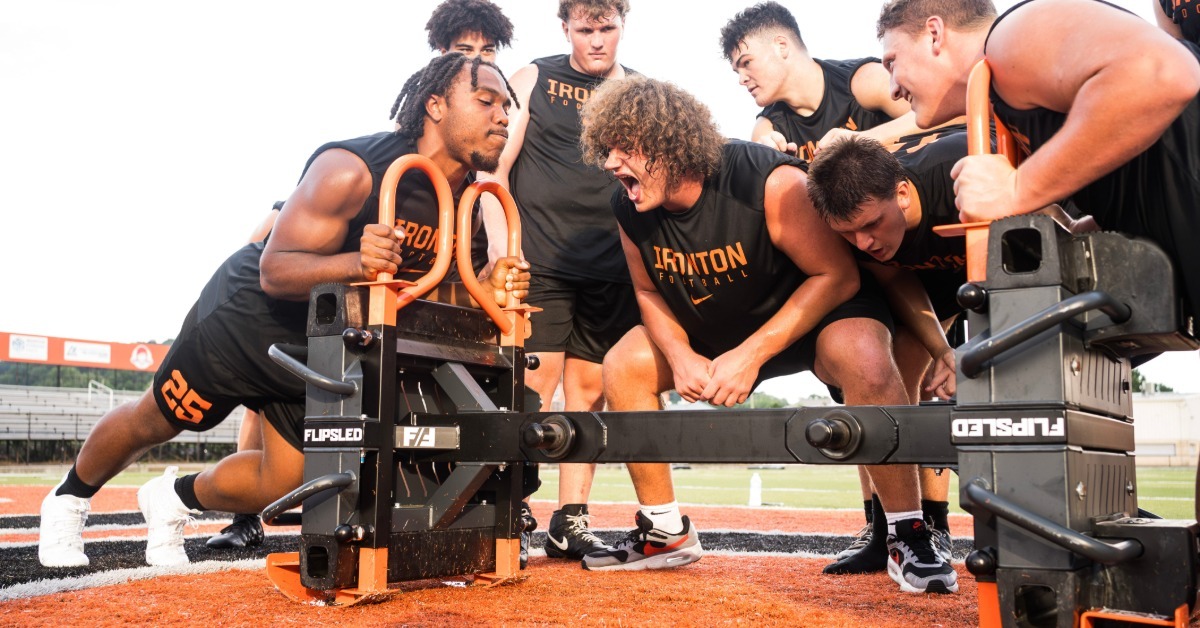
Great training does not need complexity to work. Coaches need movements they can teach fast, repeat across a roster, and use with athletes at different strength levels.
Ground-based resisted movements keep the message clear. Push through the ground, keep your base, drive your hips, and finish the rep. That simplicity helps coaches build athletic power without turning every drill into a lecture.
10. The Best Training Connects the Weight Room to the Gridiron
The weight room still has a place. Stronger athletes can absorb more contact, produce more force, and handle the demands of a long season. But the best programs do not stop at strength.
They connect strength to football movement. Ground-based work gives athletes a bridge between lifting and playing. It lets them take the power they build under the bar and apply it through their feet, hips, hands, and finish.
How the FlipSled Helps Build Ground-Up Football Power
When building ground-based power, you want a football practice sled that challenges your players more than the average tackling dummy on skids. The FlipSled fits this kind of training because it centers on simple, hard, field-ready movements. Players can push, drag, flip, drive, and finish against resistance while learning how to create force from the ground.
For football programs, that means coaches can train more than raw strength. They can build leg drive, hip explosion, leverage, body control, and finishing power in ways athletes can feel. The movement stays simple, but the carryover can show up in how players come off the ball, sustain contact, and compete through the whistle.
Build Power Where Football Begins
Barbell strength gives football players a foundation, but football power starts on the ground. The athlete who can push through the turf, control leverage, drive the hips, and finish through resistance has a better chance to turn strength into production.
If your program wants to build tougher, more explosive athletes with simple ground-based training, the FlipSled is the ultimate tool. Contact our staff to learn more about this innovative football sled and how it can help your team dominate the trenches.
Why Do I Coach Football?
-1.jpg)
Factors To Consider When Coaching the Modern Football Player
.png?width=200&height=24&name=FlipSled%20Logo%20HRZ%20WHITE%20(1).png)